




There is a seat here for you.
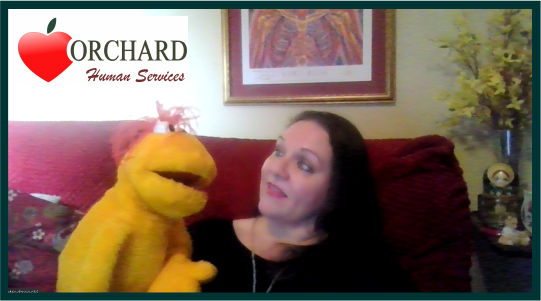
Counseling by secure video, held wherever you are most comfortable. No drive, no waiting room — just the hour, and the work.
Request an appointmentThe room changes. The care does not.
Tele-mental health is counseling delivered through a secure video connection rather than a waiting room and an office. The relationship is the same. The training is the same. The hour is the same.
Orchard has worked this way for years, and it has become how we prefer to work. Taking away the drive takes away a real barrier — no traffic, no waiting room, no arranging transportation or childcare around a fifty-minute appointment.
It also means you begin already somewhere you feel safe, which for a good deal of the work we do is not a small thing.
Reaching out is the hardest part
Most people arrive here after thinking about it for a long while. If that is you, you have already done the difficult thing.
You do not need the right words ready, or a tidy explanation of what is wrong. Come as you are, and we will start there.
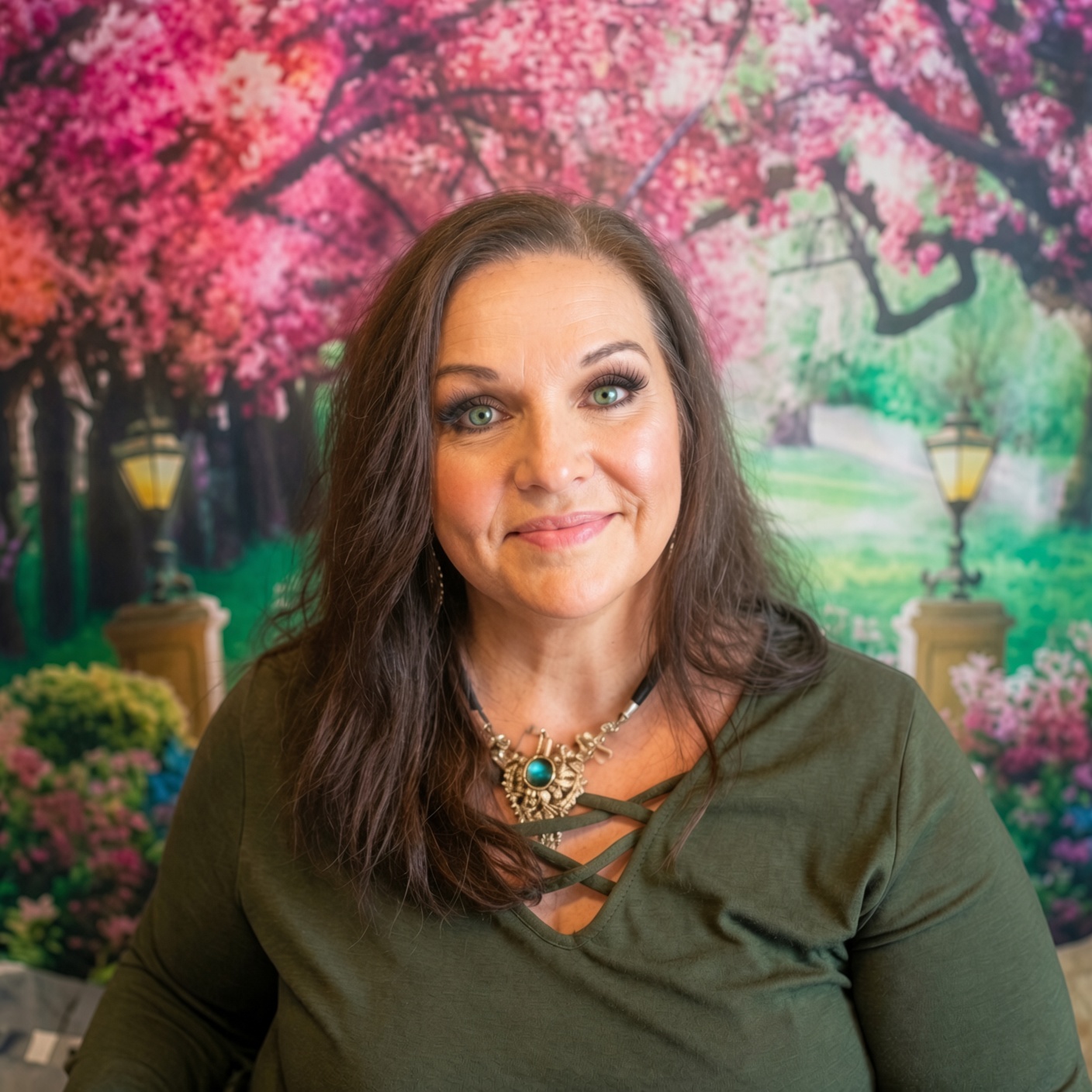
Dr. Darleen Claire Wodzenski
MS ESE, MA CMHC, PhD, LPC, NCC, ACS — Founder and Executive Director

What a session looks like
Three things happen before we begin, and none of them are complicated.
1
A link arrives before your appointment
We send it ahead of time with everything you need to get in. Nothing to buy and nothing to install.
2
You settle somewhere private
A room with a door is ideal. A parked car works beautifully. Headphones help. What matters is being able to speak without being overheard.
3
We begin wherever you would like to begin
Sessions run the same length they would in an office. If technology is not your strong suit, say so when you schedule and we will walk you through it first. We would far rather spend ten minutes on that than have you arrive flustered.
Can a child really do this?
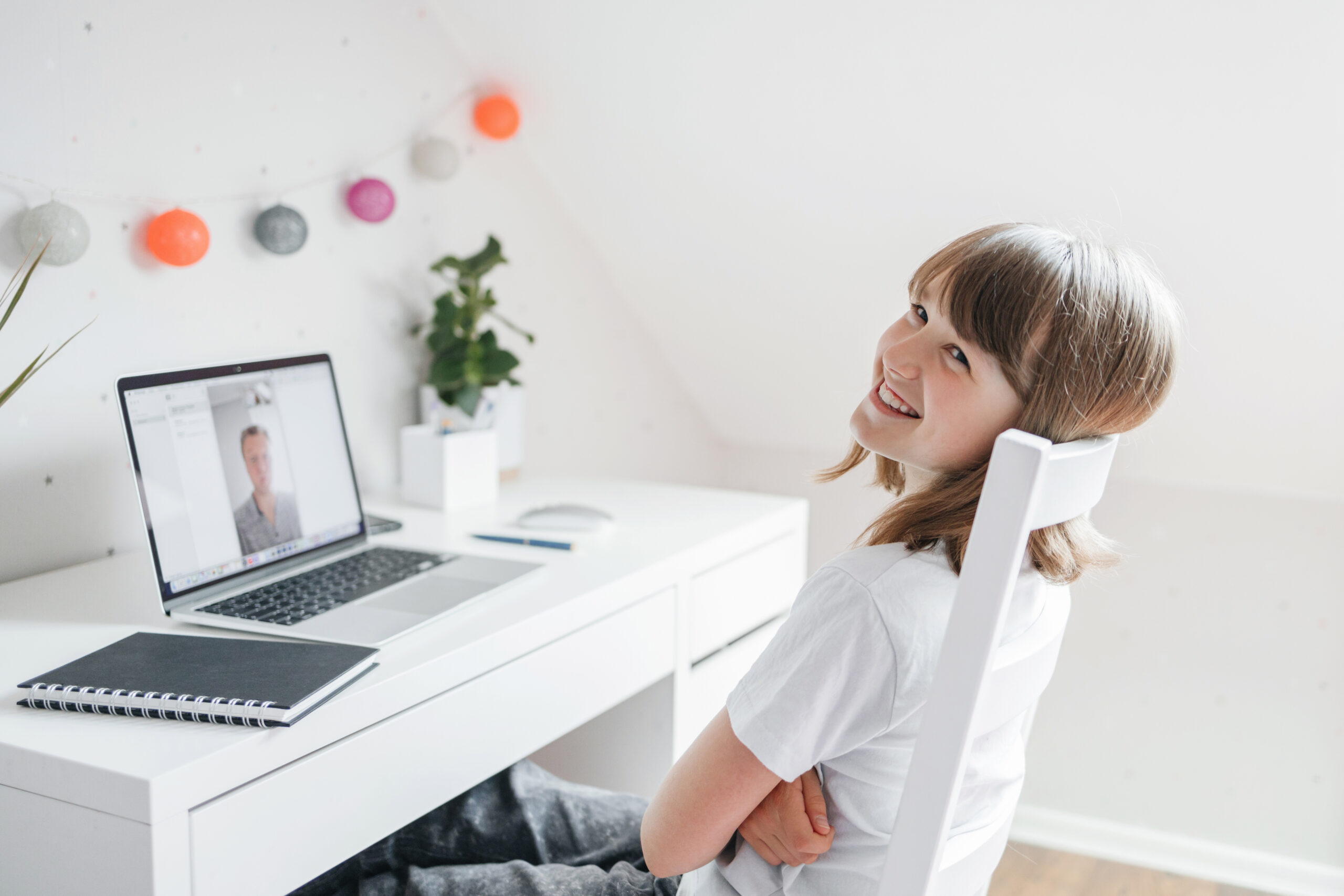
It is the question parents ask most, and the honest answer is that many children take to it well — sometimes better than in an office, because they are on their own ground with their own things around them.
Sessions with children use whatever is already in the room: drawing, play, movement, and the things a child wants to show you. Parents are often part of the session rather than waiting outside it, which for attachment and developmental work is an advantage rather than a compromise.
Our televideo platform has a great deal built into it. More than nine hundred books sit in our e-library, alongside games, puzzles, videos, music, and art activities that we can open and share on screen during a session. A child who does not want to talk yet can still draw, build, read, or play — and that is often where the talking starts.
We will talk through the practical side together — where your child sits, who else is home, and how to hand off at the beginning and the end.


Play is how we learn a great deal
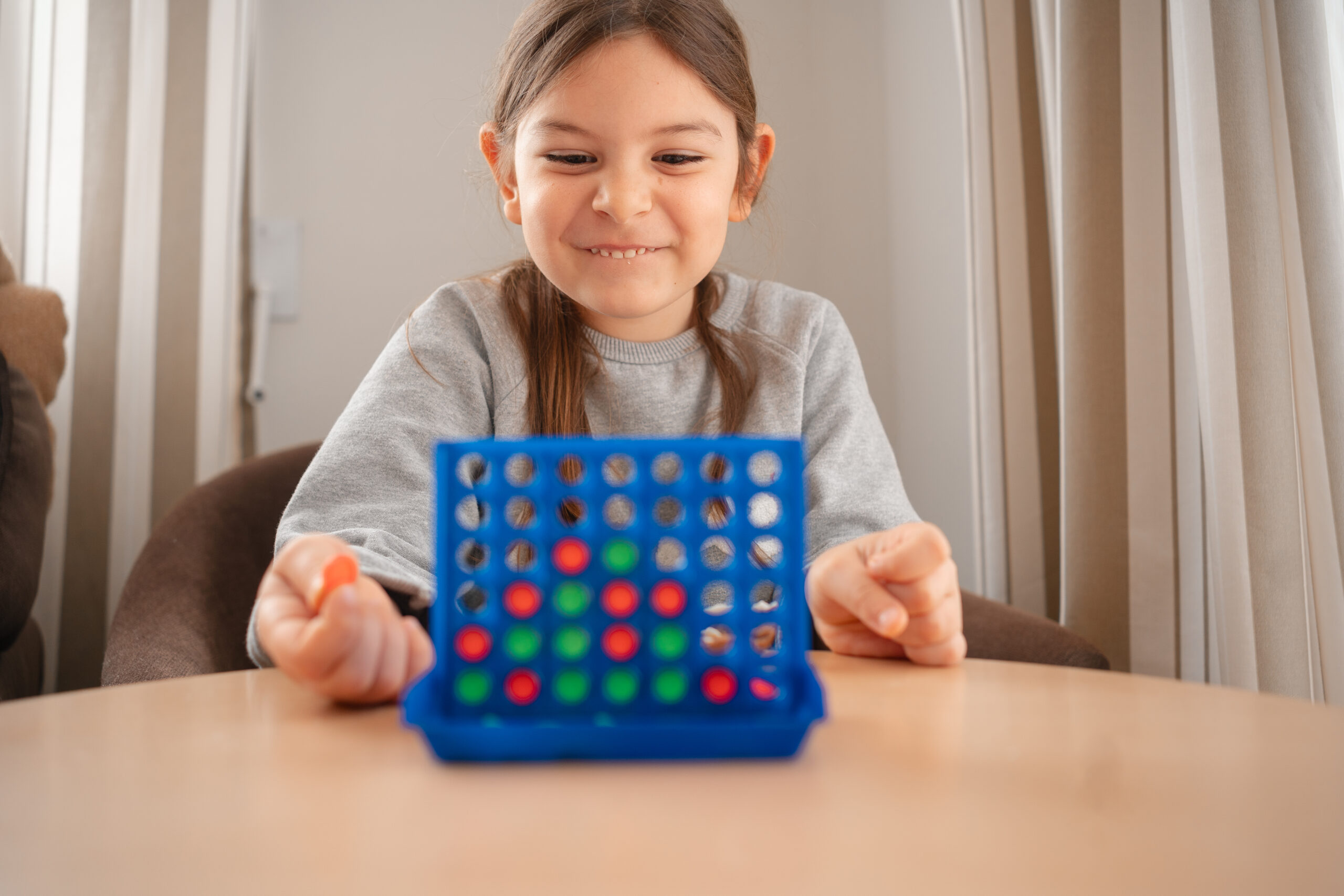
Games are not filler between the real work. Watching someone play a game of chess, work a puzzle, or think through a strategy tells us a good deal about how they think — how they hold information in mind, how they reason toward a goal, what they do when a plan stops working, and how they recover from a setback.
So we use play deliberately. Over the course of counseling it gives us a working picture of cognition, learning, memory, reasoning, and logic, gathered while someone is relaxed and absorbed rather than being tested.
Shared online play does something else as well. Taking turns, losing gracefully, reading another person, negotiating a rule — these are social skills, and a game is one of the few places you can practise them safely and repeat them until they hold.
Whether it suits you is worth asking
For most people and most concerns, video counseling works about as well as sitting in the same room. That has held up across a decade of research on anxiety, depression, and trauma. But it does not suit everyone, and it is kinder to say so now than to discover it in week six.
It tends to work well when
You have a private space and a connection you can rely on.
Distance, work hours, health, or caregiving make regular office visits hard to sustain.
There are few clinicians near you working in the areas you need.
Being at home helps you speak more freely than an unfamiliar office would.
Another kind of care may fit better when
There is nowhere you can speak without being overheard.
Someone needs closer monitoring or more medical oversight than outpatient counseling provides.
Safety concerns mean in-person support is needed the same day.
If we are not the right fit, we will tell you and help you look for someone who is. That conversation costs you nothing.
Your privacy
Sessions are held on a HIPAA-compliant video platform and we do not record them. The confidentiality that applies to counseling in an office applies here, including the same legal exceptions, which we go through with you at the start of care.
Before your first session you will complete a consent for telehealth along with the rest of the intake paperwork. It covers how sessions are run, what happens if the connection drops, and how we reach you in an emergency.
Two things sit on your side. Email and text are not secure channels, so please keep clinical detail out of them. And privacy in your own space is yours to arrange — headphones and a closed door do most of the work.
Where we can see you
Counseling licensure is state-based. What matters is where you are physically sitting during the session, not where you usually live — so please tell us if you will be travelling.
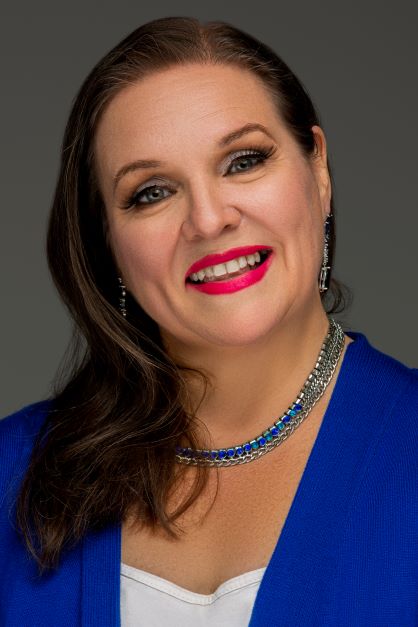
Dr. Darleen Claire Wodzenski
MS ESE, MA CMHC, PhD, LPC, NCC, ACS
Florida, Georgia, Virginia
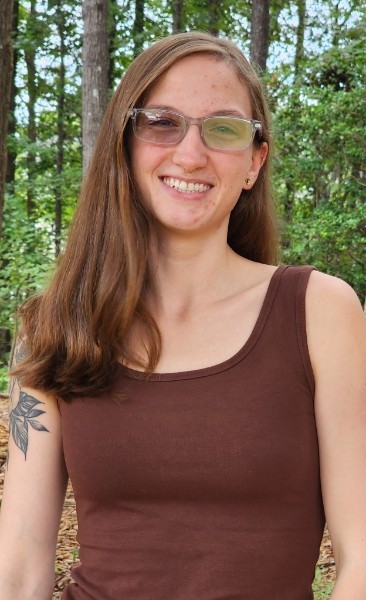
Beth Wodzenski
BA Psy, MA CMHC, NCC, APC
Georgia

Counseling interns
Graduate students, closely supervised
Georgia only
Low cost, and sometimes no cost
Most insurance plans cover telehealth counseling on the same terms as an office visit, though coverage varies. We confirm yours before your first appointment.
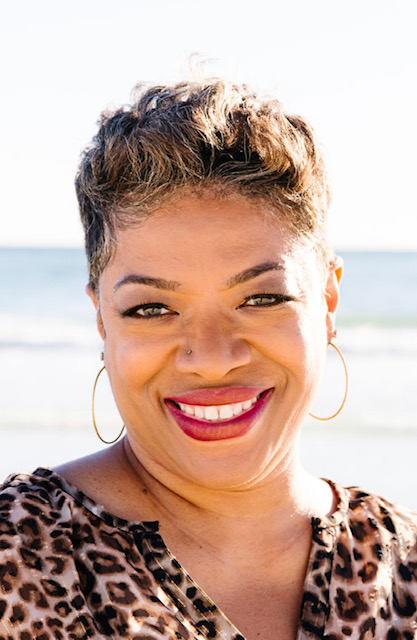
Rashonda Clay-Douthit, MSW LCSW
Internship Director
Rashonda directs Orchard’s internship and practicum program, which is what makes low-cost counseling possible here. She previously served as Associate Director of Field Education at the Mandel School of Applied Social Sciences at Case Western Reserve University.
She sees counseling clients through her own independent private practice rather than through Orchard, so Orchard’s rates and intake process do not apply to that work. We are glad to introduce you — the connection simply belongs to her.
If you need someone before we can answer
Orchard is not a crisis service and we do not watch messages around the clock. Please use one of these rather than waiting for us.
988
Suicide and Crisis Lifeline. Call or text from anywhere in the United States, at any hour.
911
For a medical emergency, or when someone is in immediate danger.
1-800-715-4225
Georgia Crisis and Access Line, around the clock, with mobile teams across the state.
Starting is one form and one email
Complete the new client forms and we will reach out within three business days to schedule your first session.
If you would rather ask something first, email DrDarleen@orchardhumanservices.org. A short note is enough. There is no wrong way to start.
Orchard Human Services, Inc.
An IRS-approved 501(c)(3) nonprofit organization, uplifting lives by counseling, educating, and caring.
DrDarleen@orchardhumanservices.org
Return to the home page