



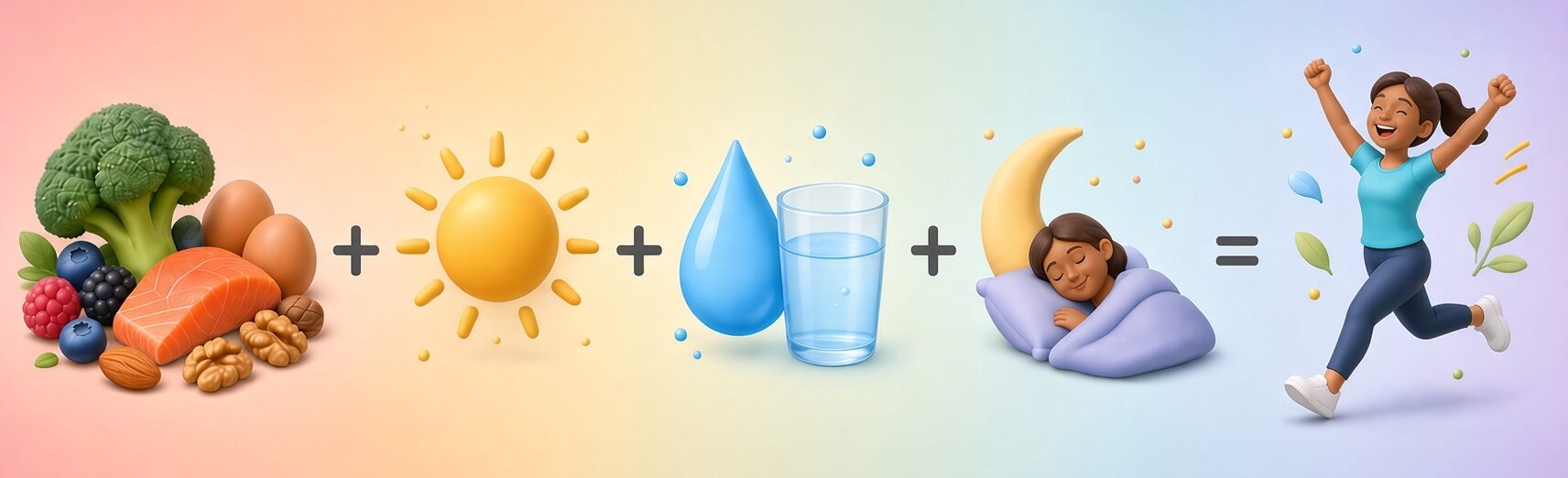
Ever Wonder Where Your Energy Comes From?Meet the tiny engines inside you — and what helps them run
Some days you have plenty of energy. Some days you have none, and you cannot work out why.
This page explains where your body’s energy comes from — the energy to walk, talk, think, hug, play, work — and what you can do to support it.
Plain language, no science background needed.
Read-aloud is not available in this browser. Chrome, Edge, and Safari support it.
Where energy actually comes from
You eat food. You breathe air. Somewhere between those two things and actually feeling able to get off the sofa, something has to turn one into the other.
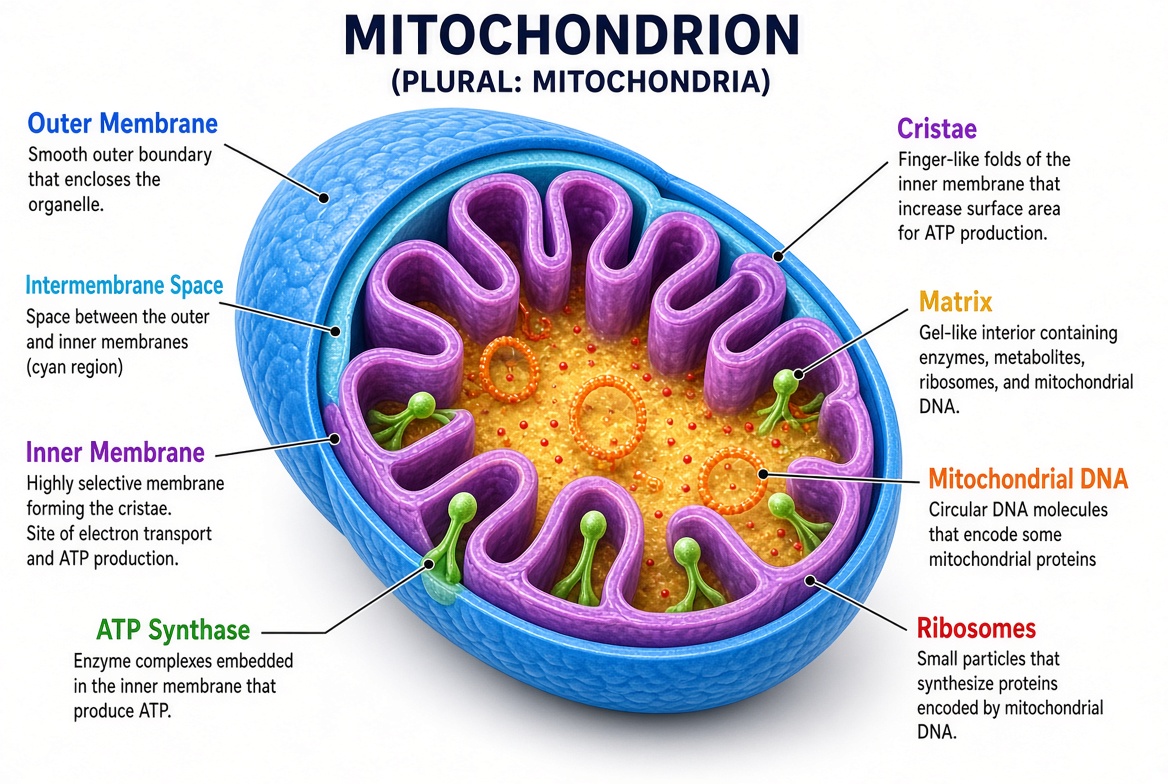
That job belongs to tiny structures inside nearly every cell in your body. They are called mitochondria (say it: my-toe-KON-dree-uh), and one on its own is a mitochondrion. People often call them the batteries of the cell, which is close enough to be useful — though they are really more like little engines, because they burn fuel rather than store it.
They make about nine-tenths of all the energy your body uses (National Institutes of Health, 2025). Every heartbeat. Every thought. Every time you climb the stairs, heal a cut, or fight off a cold. All of it is paid for out of what they produce.
The parts of you that work hardest have the most of them. A single muscle cell or brain cell can hold thousands. Your body puts the engines where the work is.
And here is the part worth staying for: they are not fixed. What you do each day genuinely changes how many you have and how well they run. That is what the rest of this page is about.
You got yours from your mother
Almost everything else about you is a mix of both parents. Not these. Mitochondria carry a small set of their own instructions, separate from the rest of your DNA — and that set passes down through the mother’s side alone (National Institutes of Health, 2025).
So the engines running inside you right now came from your mother, and from her mother, and back along that line as far as you care to follow it.
Why they shape how you feel
It is easy to treat energy as a mood or a personality trait — some people are just energetic, some just are not. But a great deal of what we call energy is a physical supply question, and mitochondria are where that supply is made.
Their job is broader than fuel, too. Beyond energy production, mitochondria participate in cell signalling, calcium balance, and the everyday housekeeping that keeps tissue healthy (Magalhães et al., 2014). Researchers have described them as a hub where sleep and body-clock rhythms, the gut, and the immune system all intersect (Casanova et al., 2023).
Which is why supporting them tends to show up in ordinary, noticeable ways: getting through the afternoon without a slump, having something left for your evening, recovering from a hard day in a day rather than three.

Where you notice it
- Stamina through a full day
- Mental clarity and sustained attention
- How quickly you recover after exertion
- Steadiness of energy rather than peaks and crashes
- How you feel on waking
Why demand varies
Energy needs are not constant. Growth, healing, high mental load, physical training, heat, cold, and the effort of adapting to anything new all raise the bill. Vitality is really a question of supply meeting demand — which means you can work on either side of it.
You can build more of them
This is the finding that changes how people think about their own energy. You are not issued a fixed number of mitochondria at birth and left to spend them down. Your body makes new ones throughout life, through a process called mitochondrial biogenesis.
The strongest and best-established trigger is physical activity. Endurance exercise reliably increases the signalling that drives mitochondrial building in muscle, a finding confirmed across randomized trials (Khoramipour et al., 2025). The response involves a coordinated switching-on of hundreds of genes across two separate genomes at once (Fealy et al., 2021).
Brief, manageable challenge makes the system stronger
Biologists call this hormesis: a mild stress that provokes an adaptive response leaving the system more capable than before (Casanova et al., 2023). A hard walk, a cold rinse, a warm sauna, a genuinely hungry stretch before dinner — each briefly asks more of your cells, and your cells answer by building capacity.
The word brief is doing real work in that sentence. Short challenge followed by real recovery builds. Unrelenting challenge with no recovery does the opposite. This distinction runs through everything below.
The six things that matter most
None of these is exotic. That is rather the point — the levers with the best evidence behind them are the ordinary ones, and they are the first to be dropped when life gets busy.

Movement
The most reliable way to build mitochondrial capacity. Endurance work raises mitochondrial density; brief bursts of harder effort add a strong signal; strength work protects what you have as you age.
- Consistency beats intensity — most days, not heroic days
- Twenty to thirty minutes is meaningful
- Walking counts, and briskly walking counts more
- Mix steady effort with occasional short pushes
Sleep
Much of the body’s cellular repair and clearing-out happens while you sleep. Sleep is not time subtracted from a productive day; it is when the maintenance crew is allowed in.
- A consistent wake time anchors everything else
- Enough hours, and enough uninterrupted hours
- Protect the hour before bed from bright screens
- Cool, dark, and quiet where you can manage it
Food
Mitochondria need both fuel and the specific nutrients that let them handle it. Colourful plants, adequate protein, and healthy fats supply the cofactors and antioxidants the process depends on.
- Eat a range of colours — the pigments themselves matter
- Adequate protein at each meal
- Leafy greens, nuts, seeds, fish, olive oil, legumes
- Regular meals rather than long empty stretches followed by a lot
Light
Your body clock sets the tempo for a great deal of cellular activity, and mitochondrial rhythms are closely tied to it. Morning light is the strongest signal you have for setting that clock.
- Get outdoors early, ideally within an hour of waking
- Daylight is vastly brighter than indoor light, even under cloud
- Dim things down in the evening
- Ten minutes is worth having; more is better
Temperature
Comfortable temperatures ask nothing of your cells. Brief exposure to heat or cold asks something — and the adaptive response is part of what keeps the system capable.
- A cool finish to a shower
- Warmth: a sauna, a hot bath, a genuinely warm room
- Being outdoors in real weather rather than always climate-controlled
- Brief and comfortable-ish — this is not an endurance test
Recovery
Adaptation happens during rest, not during effort. Sustained pressure with no let-up leaves the system depleted rather than stronger — the same stressor, minus the recovery, produces the opposite result.
- Genuine downtime, not just a different screen
- Slow breathing, stillness, time in nature
- Connection with people you like
- Easier days deliberately scheduled after harder ones

Sixteen ideas worth knowing about
A scannable map of the territory. Some of these are things you can simply start doing. Others — anything involving testing or supplements — are conversations to have with your physician and pharmacist rather than decisions to make alone.
Anything involving a supplement or a lab test belongs in a conversation with your physician and your pharmacist. Nutrient needs differ enormously between people, some supplements interact with medicines or with each other, and more is not better. Your pharmacist in particular can check interactions in a few minutes and is consulted far less often than they should be.
Housekeeping and renewal
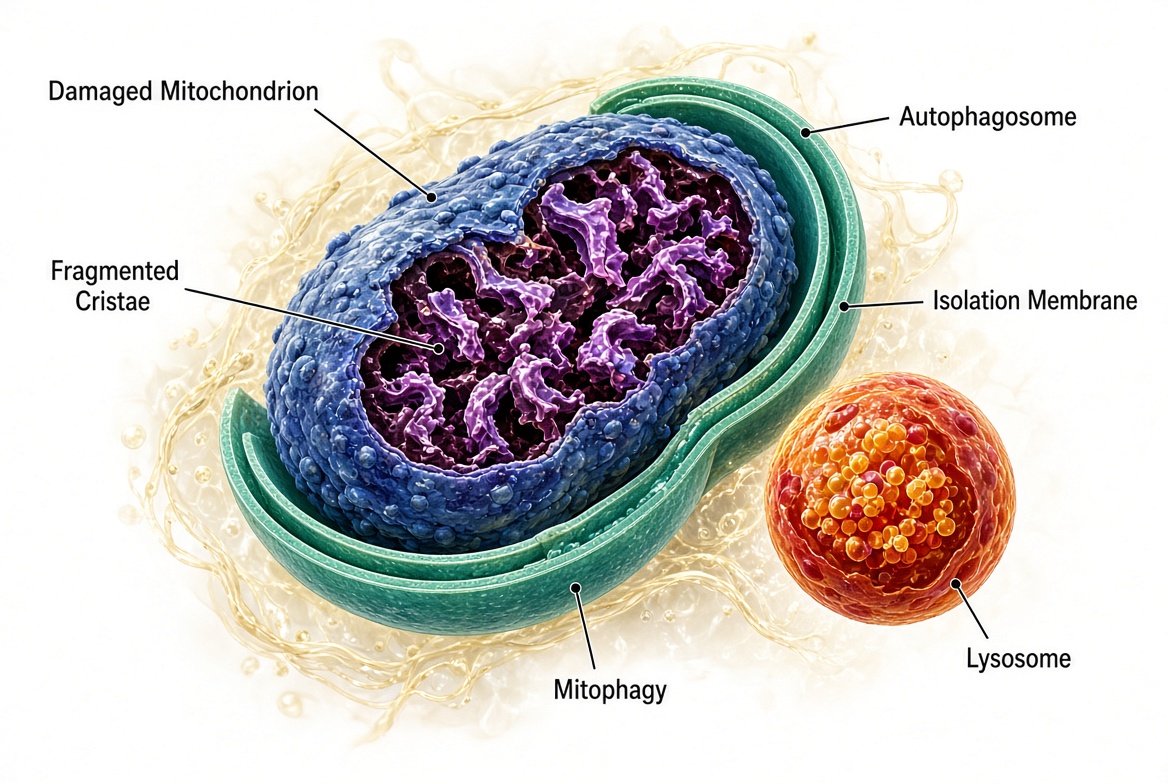
Building new mitochondria is only half of it. Your body also has a system for identifying worn-out ones and recycling them, so that capacity is not diluted by parts that no longer pull their weight. This clearing process is called mitophagy, and it works alongside biogenesis rather than in competition with it (Fealy et al., 2021).
The practical upshot is reassuring: quality matters as much as quantity, and the same everyday inputs that prompt building — movement, sleep, periods without constant eating — also prompt the clearing out. You do not have to manage the two separately. Living in a rhythm of effort and recovery does both.
This is a renewable system, not a declining balance
It is easy to think of vitality as something that only runs down with time. The biology says otherwise. Your body rebuilds and renews these structures continuously, and it takes its instructions largely from how you live. That means the question is rarely whether it is too late — it is what you would like to start with.
Where to start
If you tried to do all six at once you would probably do none of them past a fortnight. Pick one. Give it three weeks. Then add another.

Talk with your own providers first
This page is general wellness education. It is not medical advice, and it is not tailored to any individual. Before beginning a new exercise routine, making significant dietary changes, using heat or cold exposure, or adding any supplement, please talk with your physician — and with your pharmacist, who can advise on how any supplement may interact with what you already take. What is appropriate varies enormously from person to person.
Why a counselor cares about cellular energy
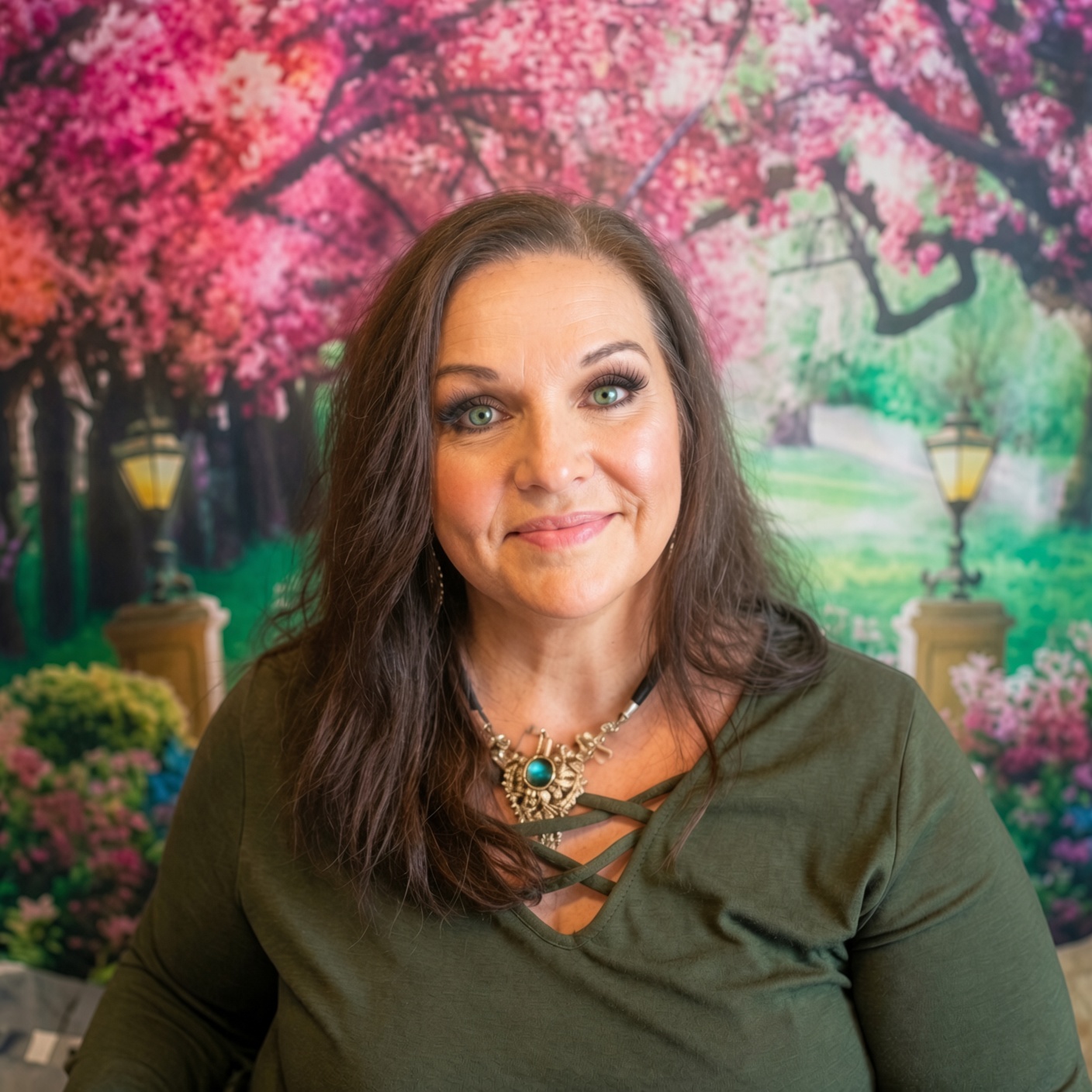
Wodzenski
People often arrive in my office describing themselves in moral terms — lazy, unmotivated, not trying hard enough. Much of the time what they are actually describing is a supply problem, and no amount of trying harder fixes a supply problem.
I am a Licensed Professional Counselor. I do not prescribe, diagnose medical conditions, or give medical advice. What I do is help people build lives that support them — including the ordinary daily rhythms that turn out to matter a great deal more than most of us were taught.
I also encourage every client to work with an integrated care team: a physician who knows their history, a pharmacist whose knowledge is chronically underused, and a counselor who sees them often enough to notice change early.

Building a life that supports your energy
If you would like support in putting these rhythms in place — and in staying with them past the first enthusiastic fortnight — I would be glad to talk.
MS ESE, MA CMHC, PhD, LPC, ACS
Please do not include detailed health information in a text or email, as neither is a secure channel.
References
- Casanova, A., Wevers, A., Navarro-Ledesma, S., & Pruimboom, L. (2023). Mitochondria: It is all about energy. Frontiers in Physiology, 14, 1114231. https://doi.org/10.3389/fphys.2023.1114231
- Fealy, C. E., Grevendonk, L., Hoeks, J., & Hesselink, M. K. C. (2021). Skeletal muscle mitochondrial network dynamics in metabolic disorders and aging. International Journal of Molecular Sciences, 22(19), 10740. https://pmc.ncbi.nlm.nih.gov/articles/PMC8533934/
- Khoramipour, K., et al. (2025). The impact of exercise on mitochondrial biogenesis in skeletal muscle: A systematic review and meta-analysis of randomized trials. https://pubmed.ncbi.nlm.nih.gov/40459444/
- Magalhães, J., Venditti, P., Adhihetty, P. J., Ramsey, J. J., & Ascensão, A. (2014). Mitochondria in health and disease. Oxidative Medicine and Cellular Longevity, 2014, 814042. https://doi.org/10.1155/2014/814042
- National Institutes of Health. (2025). Mitochondria and health. NIH Research Matters. https://www.nih.gov/news-events/nih-research-matters/mitochondria-health
Dr. Darleen Claire Wodzenski, MS ESE, MA CMHC, PhD, LPC, ACS · Orchard Human Services, Inc.
This page is general wellness education. It is not medical advice, diagnosis, or treatment, and it is not tailored to any individual. Licensed professional counselors do not prescribe or provide medical care. Please consult your physician and pharmacist before changing your exercise, diet, or supplement routine.