



A personalized plan for students with disabilities to succeed in school
What is an IEP?
An Individualized Education Program (IEP) is a legal document developed for public school students in the United States who need special education services. It outlines tailored goals, supports, and accommodations to help the student access the curriculum and make educational progress.
Required under the Individuals with Disabilities Education Act (IDEA), the IEP is created by a team including parents, teachers, and specialists, and reviewed annually.
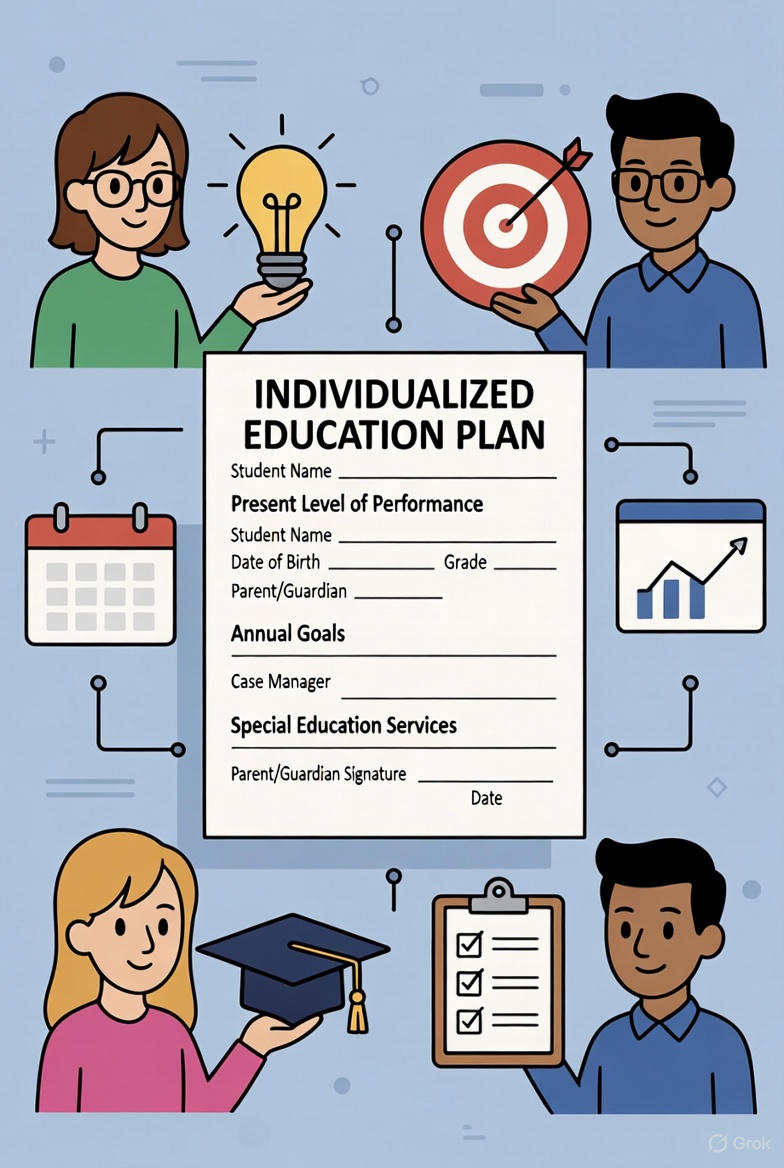
The IEP Process
The process typically includes:
- Evaluation
- Eligibility determination
- IEP development
- Implementation
- Annual reviews
learning of students with exceptional needs.
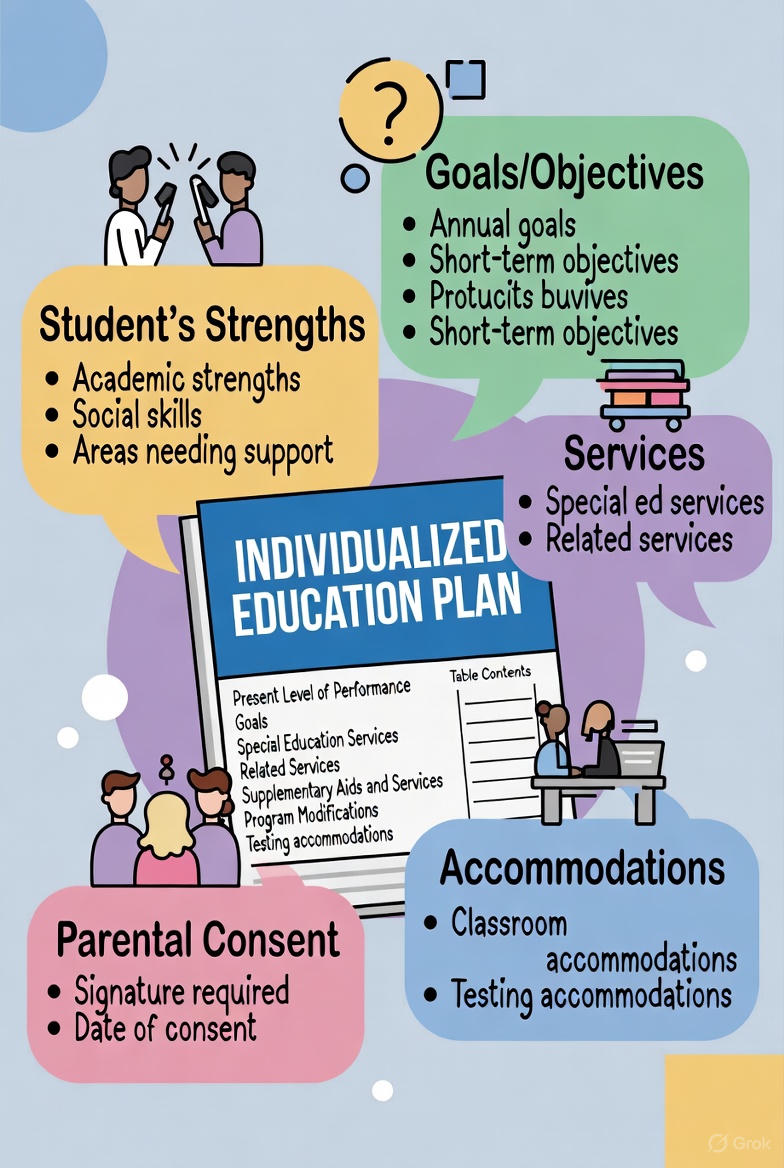
Key Components of an IEP
- Student’s present levels of performance
- Annual goals and objectives
- Special education services and accommodations
- Participation in general education
- Transition planning (for older students)
- Progress monitoring
Who Qualifies for an IEP?
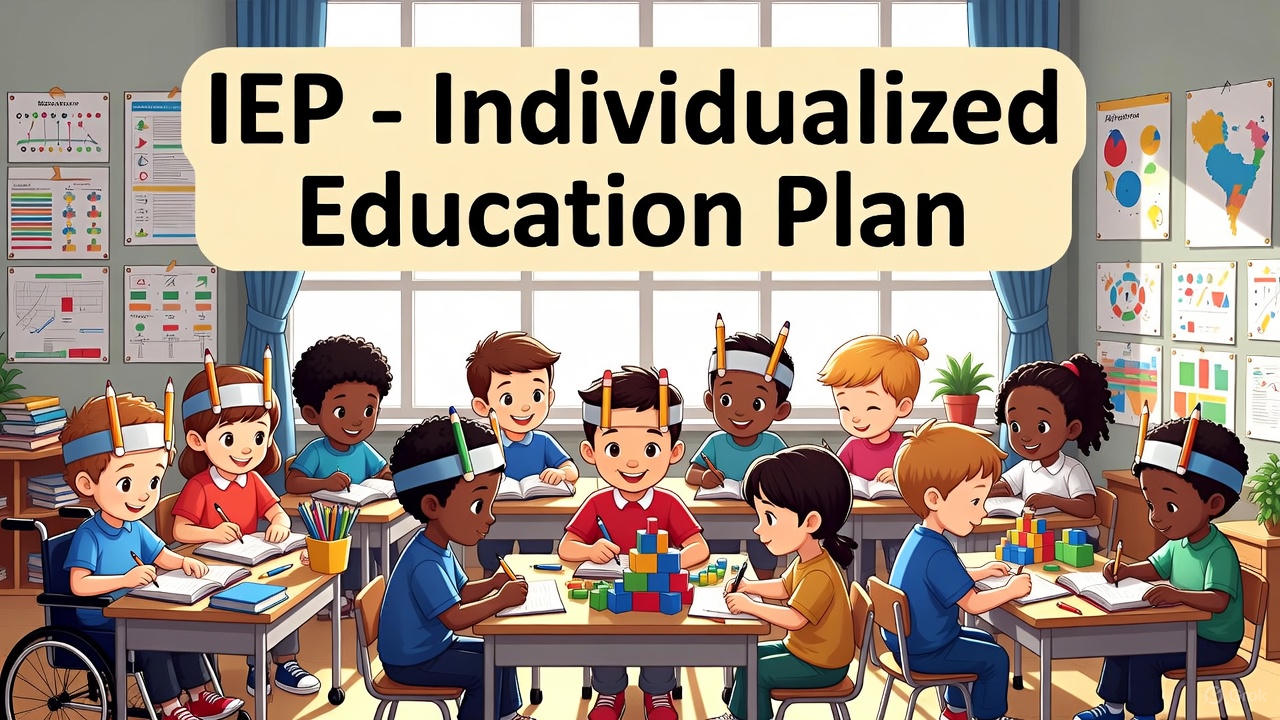
Any student with an exceptional need that interferes with the learning and academic success of self or classmates may quality for an IEP. The disability may be mild or dramatic; it might involve medical or physical disability; it might involve intellectual or developmental disability; or it might involve a mental health or emotional or behavioral disorder.
Whatever the disability, it must be diagnosed by a licensed professional whose scope of practice encompasses the disability. What that means is that a licensed medical professional would diagnose a medical condition while a licensed mental health professional would diagnose a menta health or behavioral disorder. Some conditions may be diagnosed by multiple types of professionals, such as an anxiety disorder may be diagnosed by both the child’s pediatrician and clinical menta health counselor. In some cases, the school district may have a School Psychologist or Psychiatrist who can diagnose your child and make recommendations for IEP or Section 504 provisions.
Remember that children with exceptional or special needs must still attend school and demonstrate academic progress. Some very medically or mentally fragile children may qualify for homebound education services under special circumstances, and be taught from home. Still other children may be placed in specialized learning schools or classrooms that provide focused support, such as with an Autism and Sensory classroom, small group classroom, or EBD or emotionally and behaviorally disordered classroom with higher level supervision and behavioral support to promote safety.
Whatever the case, you can see these children as Super Heroes who overcome their challenges to achieve learning success.

and participate in learning and evaluation to
demonstrate progress. You can think of these
children and youth as Super Heroes who take
on the system from a young age to succeed.
Information based on U.S. Department of Education and IDEA guidelines. For official advice, consult your school or local education authority. Or set up a consultation or counseling services for your child with Dr. Darleen Claire Wodzenski, MS ESE, MA CMHC, PhD, LPC, NCC, ACS who is a Clinical Mental Health Counselor and Exceptional Student Educator or Special Educator.