



The letters are the same, just the order is different. But the differences between EIP and IEP are considerable. A child may receive EIP support in an attempt to correct any learning problems long before qualifying for special education services under an IEP. Learn more below!
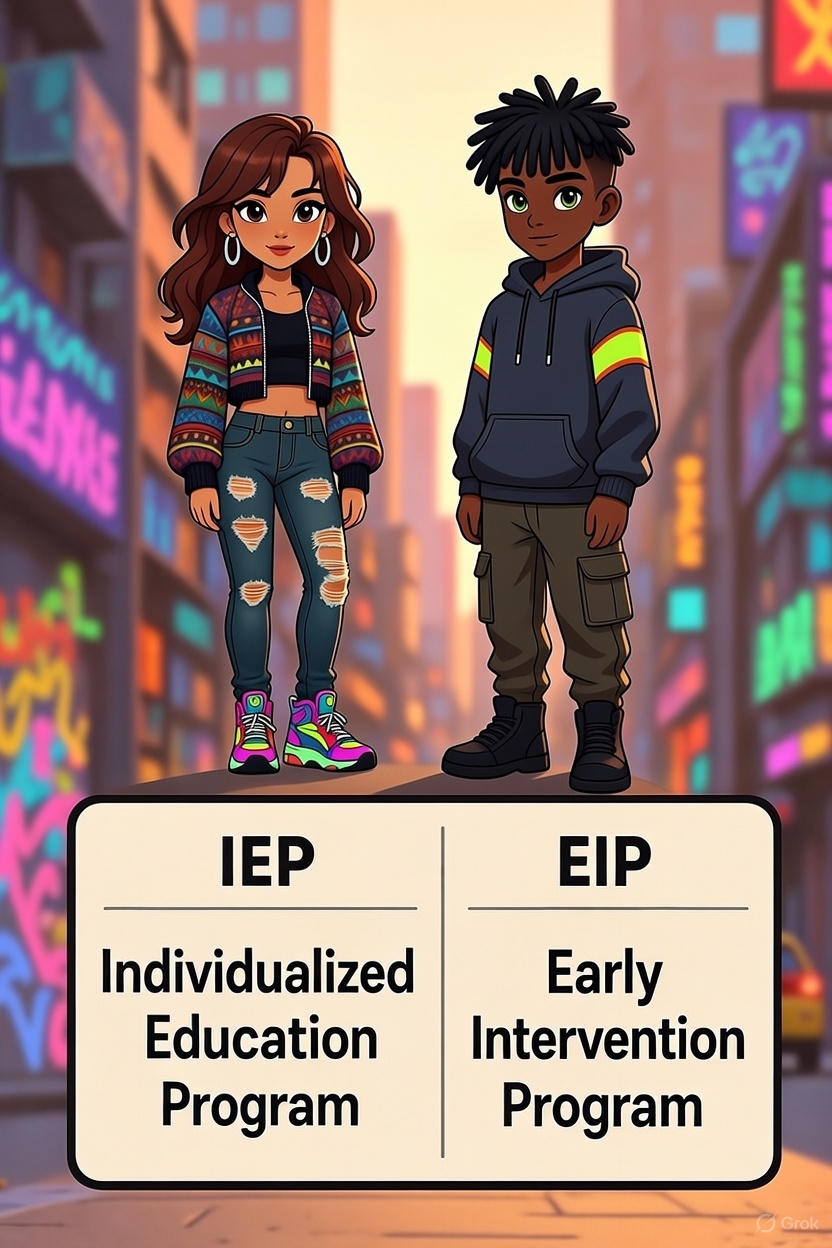
students (primarily in contexts like Ga public schools).
Introduction
In special education and academic support, the terms EIP (Early Intervention Program) and IEP (Individualized Education Program) are often mentioned. They serve different purposes and target different needs.
EIP is a general education support program for young students at risk of falling behind academically. Typically, a student who is struggling will be elevated on the RTI (Response to Intervention) Scale to receive more specialized support. EIP, or Early Intervention Program, is one example of how schools can provide elevated support to resolve learning problems. Only after making an extended effort to correct problems will most children qualify for special education services.
An exception to the requirement for students to engage in higher levels of support for an extended time before receiving special education services are such conditions as Autism Spectrum Disorder and visual and hearing impairment.
Once children finally qualify for special education services, they will be served under a specialized Individualized Education Program or IEP. The IEP, therefore, is a formal special education plan for students with identified disabilities.
This explanation clarifies the differences to help parents, teachers, and educators understand which might apply to a student.
If you need support to locate a provider to diagnose, document, and identify interventions to facilitate learning for your child with mental health, emotional, behavioral, or developmental disorder, reach out to Dr. Darleen to schedule a session or consultation at DrDarleen@orchardhumanservices.org or call (770) 686-0894.
What is EIP?
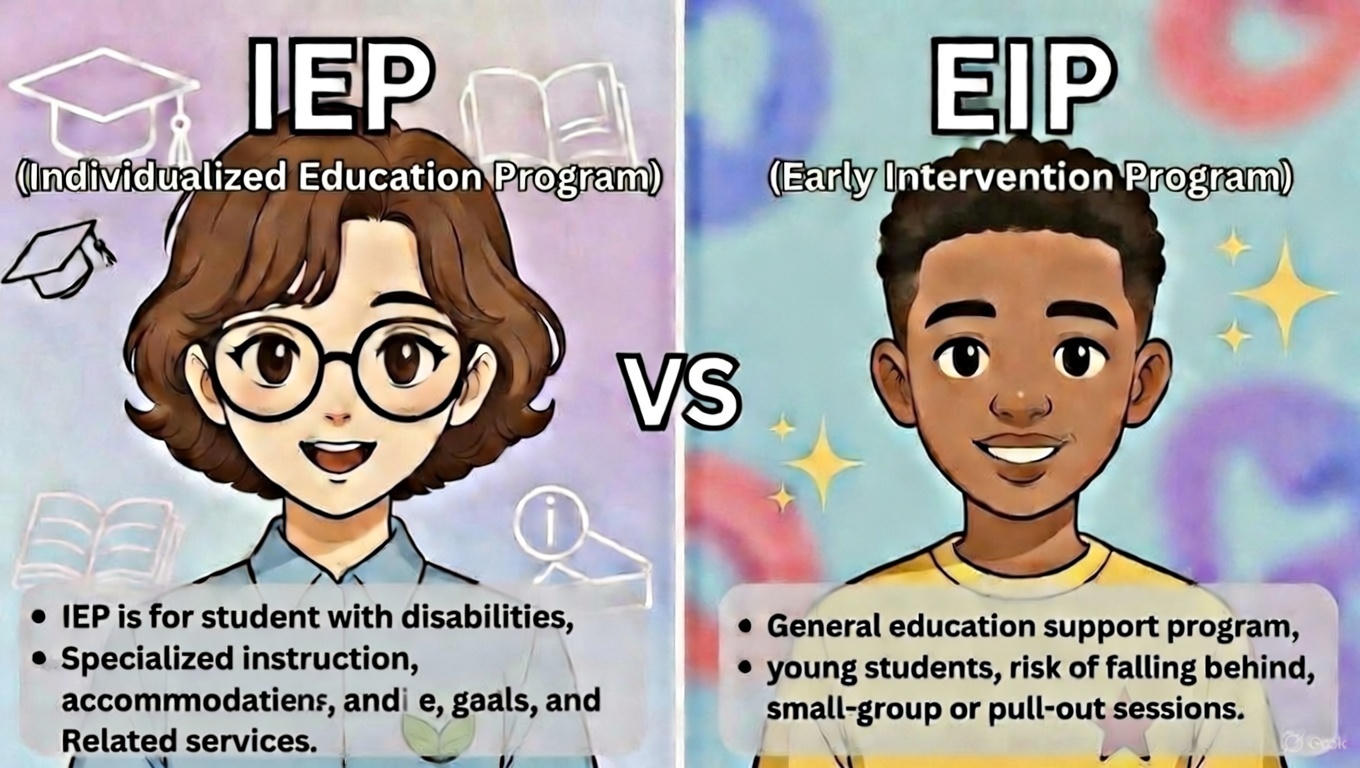
The Early Intervention Program (EIP) is a Georgia state-funded program for students in grades K-5 who are at risk of not meeting or maintaining grade-level standards in reading and/or mathematics.
- It provides additional instructional support through small-group or pull-out sessions.
- EIP is part of general education and is not considered special education.
- The goal is short-term intervention to help students catch up quickly.
- Students enter and exit based on progress monitoring; it’s not permanent.
What is IEP?
An Individualized Education Program (IEP) is a legally binding document under federal law (IDEA – Individuals with Disabilities Education Act) for students ages 3-21 with a qualifying disability that impacts their education.
- It outlines specialized instruction, accommodations, goals, and related services (e.g., speech therapy).
- IEP is part of special education and requires formal evaluation and eligibility determination.
- The plan is reviewed annually and involves a team including parents, teachers, and specialists.
- It ensures a Free Appropriate Public Education (FAPE) in the least restrictive environment.

EIP and IEP but the similarities in the letters
make it confusing and frustrating.
Key Differences: EIP vs. IEP
| Aspect | EIP (Early Intervention Program) | IEP (Individualized Education Program) |
|---|---|---|
| Purpose | Provide temporary academic support to at-risk students in reading/math | Provide ongoing specialized education for students with disabilities |
| Grades/Ages | Primarily K-5 | Ages 3-21 |
| Category | General education intervention (RTI/MTSS tier) | Special education |
| Eligibility | Based on academic performance and risk factors (no disability required) | Requires formal evaluation and one of 13 qualifying disabilities |
| Legal Basis | State-funded (Georgia DOE guidelines) | Federal law (IDEA) |
| Duration | Short-term; students exit when performing at grade level | Long-term; reviewed annually until graduation or age 21 |
| Services | Small-group instruction, pull-out or push-in support | Specialized instruction, accommodations, therapies, modifications |
| Documentation | No formal individualized plan like IEP | Detailed legal document with goals and services |
When Might a Student Need EIP or IEP?
Many students start with EIP as an early support. If progress is insufficient, it may lead to a referral for special education evaluation and potentially an IEP.
EIP is preventive and less intensive, while IEP is for students needing more comprehensive, individualized special education services due to a disability.
How Orchard Human Services Is Different

Orchard Human Services, Inc. provides specialized clinical mental health and educational supportive services to facilitate learning, growth, and development of students with exceptionalities. Remember that exceptionalities include Gifted and Talented as well as learners with Intellectual Disability and other challenges. Students must be evaluated by a properly licensed provider who notifies the school of the specialized supports required to level the playing field so that learner can succeed.
If you need support to locate a provider to diagnose, document, and identify interventions to facilitate learning for your child with mental health, emotional, behavioral, or developmental disorder, reach out to Dr. Darleen to schedule a session or consultation at DrDarleen@orchardhumanservices.org or call (770) 686-0894.
Dr. Darleen can help identify which type of professional can support your child, depending upon diagnosis and symptoms. Dr Darleen is licensed in Fl, Ga, and Va as a Licensed Professional Counselor and can diagnose most mental health and behavioral issues. ADHD and Autism diagnoses must be made by a psychologist – after which Dr. Darleen can provide clinical services and make clinical recommendations for school interventions and at-home supports.
This information is based on Georgia public school guidelines and federal special education law as of 2025. Consult your local school district or a special education advocate for personalized advice.
Sources: Georgia Department of Education, school district websites (e.g., Gwinnett, Fulton), and IDEA resources.