



A Multi-Tiered Approach to Supporting Student Success

What is Response to Intervention (RTI)?
Response to Intervention (RTI) is an educational framework designed to identify and support students who are struggling academically or behaviorally early on. It uses a multi-tiered system of evidence-based interventions, progress monitoring, and data-driven decisions to help all students achieve success.
RTI is often integrated into a broader Multi-Tiered System of Supports (MTSS), which can include academic, behavioral, and social-emotional supports.
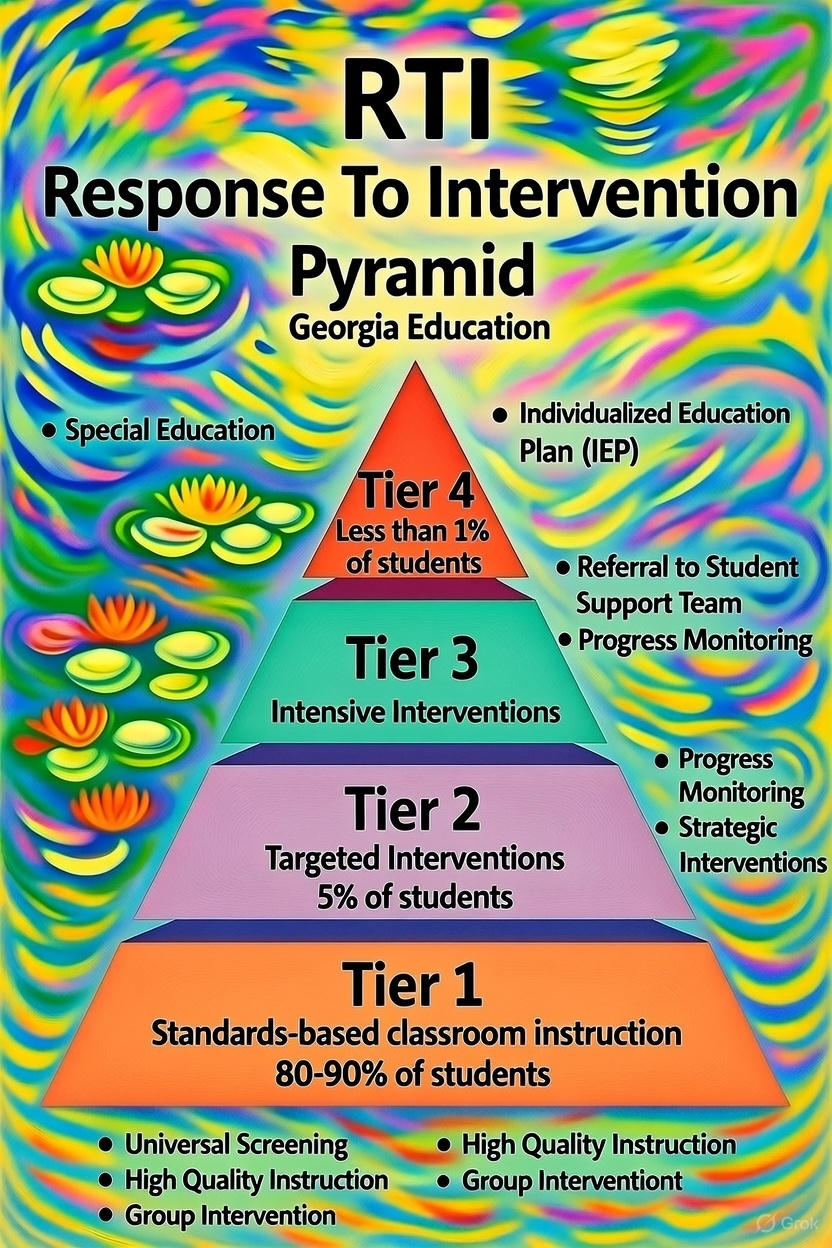
The Three Tiers of RTI
The RTI model is commonly represented as a pyramid, with broader supports at the base and more intensive interventions at the top:
- Tier 1 (Universal/Core Instruction): High-quality, evidence-based classroom instruction for all students (approximately 80-90%). Includes universal screening and differentiated teaching.
- Tier 2 (Targeted/Supplemental Intervention): Small-group interventions for students showing some risk (about 10-15%). More focused support in addition to Tier 1.
- Tier 3 (Intensive/Individualized Intervention): Intensive, often one-on-one support for students at high risk (1-5%). May include evaluation for special education services.
The RTI Process
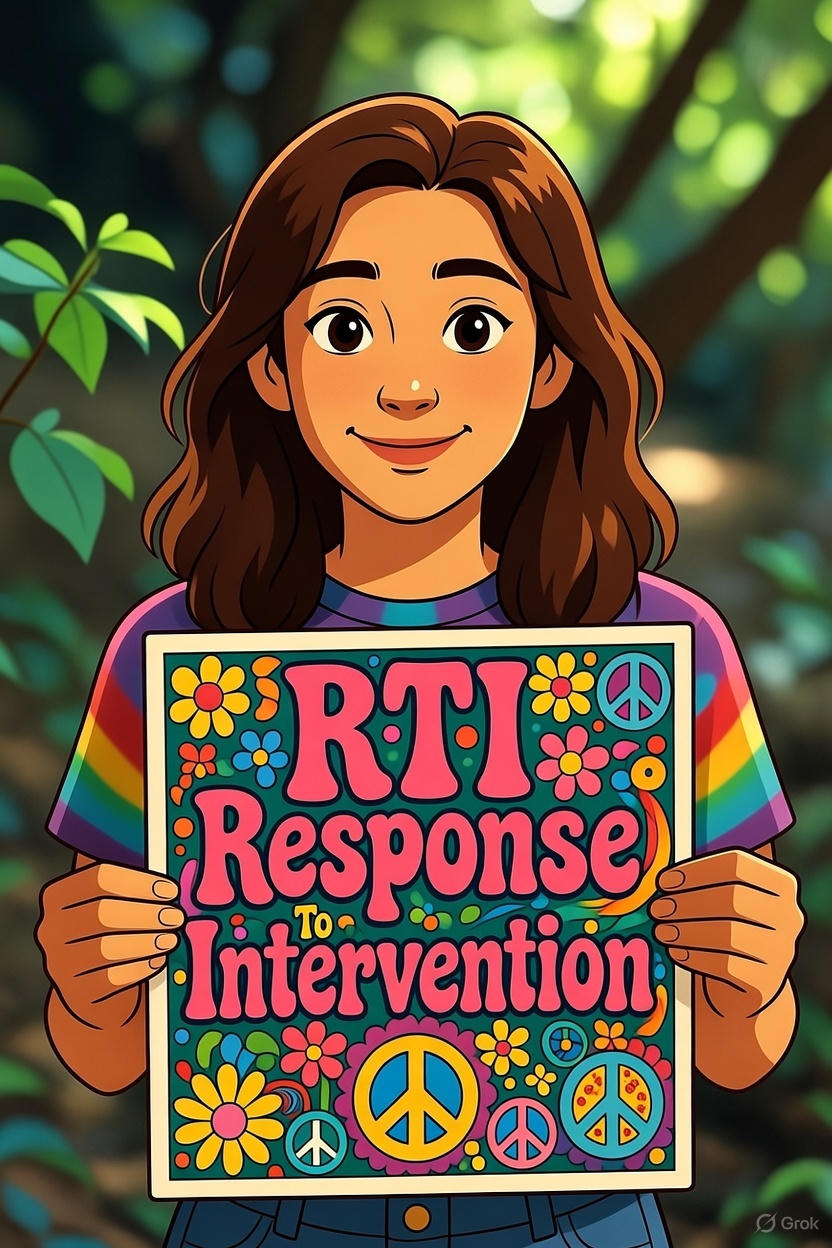
RTI Interventions by Tier
Response to Intervention (RTI) organizes supports into three tiers, building intensity as needed. Interventions are evidence-based and data-driven, often focusing on reading, math, or behavior. Below are common examples for each tier.
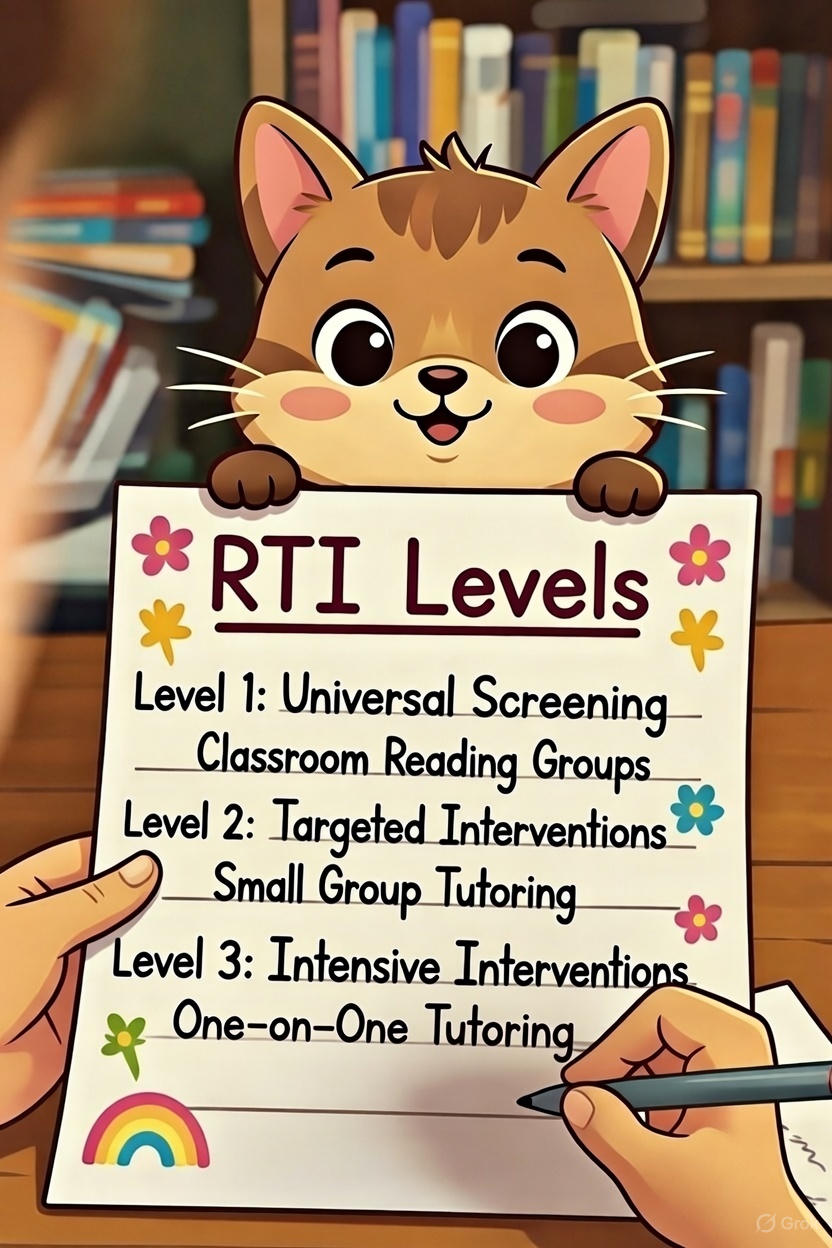
Tier 1: Universal/Core Instruction (For all students, ~80-90%)
High-quality, evidence-based classroom instruction with differentiation and universal screening.
- Differentiated instruction (e.g., flexible grouping, varied activities)
- Whole-class phonics or explicit reading instruction
- Evidence-based core curriculum in math (e.g., building foundational skills logically)
- Literature circles or group discussions for reading engagement
- Positive behavior supports like class rules and routines
- Universal screening and progress monitoring for all
Tier 2: Targeted/Supplemental Intervention (Small groups, ~10-15%)
Additional support for students at some risk, often 20-40 minutes, 2-3 times/week, in addition to Tier 1.
- Small-group instruction (3-6 students) on specific skills (e.g., fluency, phonemic awareness)
- Repeated reading or retelling for reading fluency
- Targeted math fact practice or concrete-representational-abstract (CRA) methods
- Evidence-based programs like Reading Rescue or fluency tutoring
- Check-in/check-out for behavior
- Computer-assisted programs for personalized practice
Tier 3: Intensive/Individualized Intervention (1-5% of students)
Highly focused, often one-on-one or very small groups, longer sessions, by specialists.
- One-on-one tutoring (e.g., 30-60 minutes, 5 days/week) with reading specialists
- Intensive, individualized plans (e.g., multi-sensory reading approaches)
- Customized math interventions focusing on severe gaps
- Frequent progress monitoring and adjustments
- Possible referral for special education evaluation if progress is insufficient
- Specialized programs differing from core curriculum
Need support? Contact Dr. Darleen at DrDarleen@orchardhumanservices.org or call (770) 686-0894 to set up a session or arrange a consultation.
These examples draw from educational frameworks like MTSS/RTI guidelines. Interventions should be selected based on student data, implemented with fidelity, and monitored regularly. Consult school resources or specialists for implementation.